
Aberdeen’s Calculated Gamble: Is Eirik Horneland the Right Man for Pittodrie?
A tactically assertive coach with a history of transformation, Horneland could reshape the Dons — if he has learned from a turbulent spell in France.

Eirik Horneland looks tipped to take over as the new manager of Aberdeen Football Club. A name unfamiliar on these shores, Horneland, a native of Norway, just last week departed Ligue 2 Saint-Étienne in France.
Before embarking upon his French adventure, Horneland had spent his entire coaching career in Norway. After hanging up the boots at his hometown club Haugesund, he was appointed as assistant manager, a role that allowed him to further develop his coaching identity from the dugout. A fleeting spell as Head Coach of the Norway Under-19 national team came in 2015 before Horneland quickly returned to familiar territory, this time taking on the role of Head Coach.
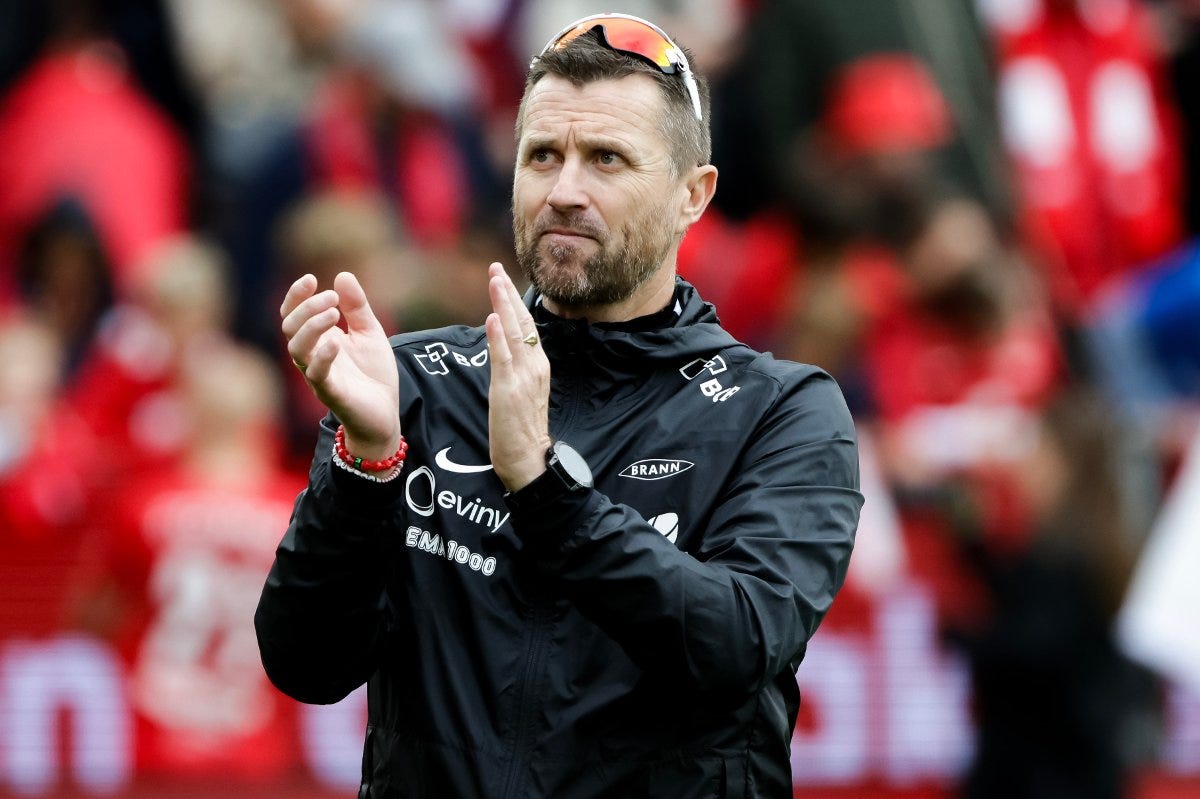
Horneland enjoyed a productive spell at Haugesund, culminating in guiding the club to a fourth-place finish in the Eliteserien — a benchmark they have yet to surpass in the seven seasons since his departure. His impressive league form in his second full season, achieved while still a relatively inexperienced manager, quickly elevated his reputation and earned him an opportunity at one of Norwegian football’s most prestigious institutions: record champions Rosenborg.
The promotion, however, came with challenges. Horneland, then only 45 years old, later admitted the role may have arrived before he was truly ready, and a difficult start to the 2020 campaign ultimately led to his exit in June. In late 2020, his return to the dugout was far more understated. Just months later, he re-emerged once more as an assistant manager, this time at SK Brann, swapping the spotlight for a supporting role at a club fighting in the lower half of the table.
Come August 2021, with the club winning just one of their opening 14 games of the campaign the Head Coach was moved on and Horneland was promoted into the hot seat. Despite losing only five of the remaining 16 games, the side struggled for victories, eventually succumbing to the drop in a relegation play-off.
Despite the major setback, it allowed the club to reset and rebuild and Horneland to ingrain his high intensity, attacking football into his players. The club bounced straight back up, winning the second division by a staggering 23 points and with a goal difference of +79. The return to the top flight failed to slow their momentum, as Brann propelled themselves up the table. The tactical revolution that Horneland marshalled at Brann turned them from relegation fodder into top-tier title contenders in a very short space of time. It also saw them get their hands on major silverware for the first time since 2007 as they stormed to the 2023 Norwegian Cup. In the league, Horneland posted back-to-back second-place finishes - the second of those in excruciating fashion as Brann failed to win either of the last two games to hand the title to Bodø/Glimt.
“Eirik Horneland’s time at SK Brann is widely viewed as extremely successful, both in terms of results and the overall connection he rebuilt between the team and the supporters,” said SK Brann twitter account @SKBrannOvergangsRykter. “What made his Brann side particularly effective was the clarity of identity. From very early on, it was clear how Brann wanted to play and what the expectations were for every player, and that consistency created both strong performances and a strong bond with the fans.
“Tactically, Brann pressed high, played with tempo, and looked to attack quickly after winning the ball. The team was very well organised defensively while still being proactive rather than reactive. Fitness, structure, and discipline were key pillars, and the players consistently looked physically strong and well drilled. Supporters especially appreciated how brave and front-footed the football was, particularly at Brann Stadion where the team often overwhelmed opponents with energy and momentum.”
The impressive consistency that Horneland had manufactured over three years at Brann alerted clubs across Europe to his talents, and he was appointed manager of historic French side AS Saint-Étienne in December 2024. Those in Bergen were gutted to see him leave after such a successful spell.
“One of the most important aspects of his tenure was that he helped restore pride and belief around the club. He understood Brann’s identity as a community-driven club and consistently spoke about the importance of representing the city and supporters. Results obviously helped, but so did the visible effort and commitment from his teams, which supporters value highly.”
It is fair to suggest Horneland has operated under sustained pressure since arriving at ASSE. The Norwegian was appointed in December 2024 with the brief of stabilising a side entrenched in the relegation zone, still reeling from a traumatic start to the campaign under predecessor Olivier Dall’Oglio — a run that notably included an 8–0 humiliation at the hands of Nice.
Arriving at the club, Horneland said: “We want a clear identity, so that when people watch ASSE, they see progress, a style. The players must play with the right attitude, the right mindset in accordance with the values of this city. (...) For me, it’s primarily about creating numerical superiority offensively.
“I want to bring many players into the opposition’s box. That’s what people want to see. I also want to create game plans to showcase the players and their creativity. The right system of play allows us to get the best out of everyone.”
Players initially struggled to adapt to Horneland’s demanding methods, and Saint-Étienne were ultimately relegated at the end of the Ligue 1 season after conceding a staggering 77 goals. As he had done previously with Brann, Horneland set his sights on an immediate return to the top flight.
Yet injuries, questionable game management within the squad, and growing criticism over a perceived lack of tactical flexibility have combined to undermine his tenure in France. Despite sitting just four points adrift of the automatic promotion places in Ligue 2, Horneland has found it difficult to meet the weight of expectation at a club of Saint-Étienne’s stature — a reality he has openly acknowledged, conceding that the squad is not progressing as hoped, defensive frailties costing his side time and time again. As such, he mutually agreed to part ways with the club last week, leaving the door open for long-time admirer Lutz Pfannenstiel to make his move.
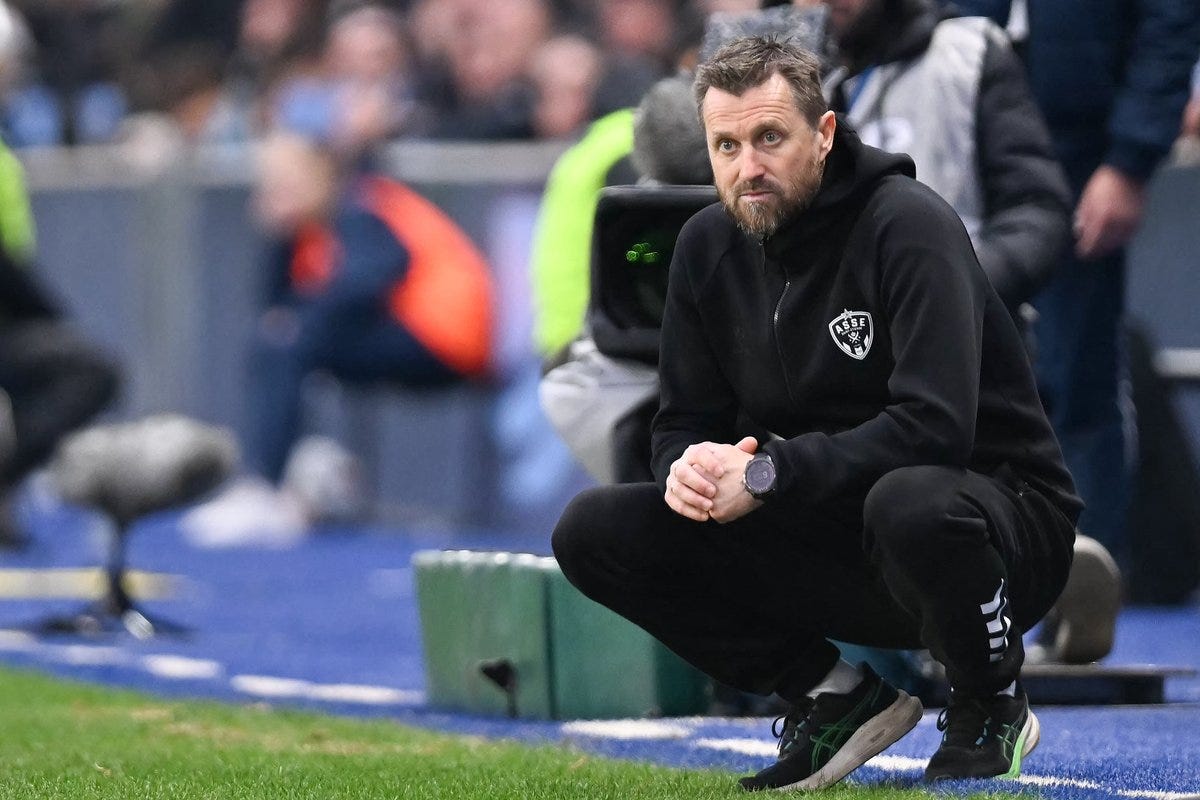
Despite an ending to his time at the club, not dissimilar to Jimmy Thelin’s at Aberdeen, there were green shoots not so long ago. On the 18th December, with his club sitting third in the table, Footboom1.com caught up with the Norwegian, writing: “A year into his tenure, Eirik Horneland has quietly transformed Saint-Etienne with a combination of tenacity and vision. With relentless pressure and a desire to create a cohesive team, the Norwegian coach reveals the secrets of how he is breathing new life into the Forez club.” In the same interview, in a nugget that will pique the interests of most Aberdeen fans, Horneland revealed: “When I was a kid, Alex Ferguson was my hero. Watching Manchester United, I saw pure leadership in him. [These days] Klopp’s energy, this intense style of play, everything he stands for – it’s incredibly inspiring.”
Over the course of the Ligue 2 season, Saint-Étienne have remained among the division’s strongest attacking sides — ranking second for goals per game, first for average possession, second for expected goals, and leading the league in both shots on target and touches inside the opposition box. The numbers point clearly towards a team built on front-foot, expansive football.
Results, however, began to drift, and with them the belief within the dressing room appeared to erode. If the statistics highlight Horneland’s commitment to proactive, attacking play, they also expose the flaw that ultimately proved costly: for all their threat going forward, Saint-Étienne simply could not keep the ball out at the other end.
According to @SKBrannOvergangsRykter, Horneland’s personality reads as if he won’t be too shaken by his French setback. “He comes across as very driven, professional, and detail-oriented. He communicates clearly and tends to protect his players publicly while demanding high standards internally. He also showed strong loyalty to the squad and staff, which helped build trust within the dressing room. While he is not necessarily the most flamboyant or media-focused figure, supporters generally respected his honesty, work ethic, and clear leadership.
“If Horneland takes charge at Aberdeen, supporters can likely expect a manager who will try to implement a clear playing identity, demand high physical and tactical standards, and work to build a strong collective culture. His teams usually take time to fully click, but once his ideas are established, they tend to be very difficult to play against. He also has experience handling pressure and expectation at a large, passionate club, which could be valuable in Aberdeen’s environment.”
If Horneland is indeed to take over at Pittodrie as is expected by reports, then he will need to learn valuable lessons from his year in France. Back in October, St Etienne outlet Peuple Vert wrote: “The conclusion is clear: ASSE is no longer surprising anyone. Eirik Horneland’s game is now well-analyzed by opponents. The Norwegian seems unable to adapt tactically. Rapid transitions are anticipated, passing patterns blocked.” The similarities to the end of Thelin’s tenure are clear and should Horneland seek to succeed where his Scandinavian counterpart could not, he will need to be adaptable.
While some traditionalists insist that Scottish football has little appetite for expansive, tactically adventurous ideas, evidence to the contrary can be found just down the road in Lanarkshire — where a clearly communicated philosophy has translated into tangible success.
Horneland appears to satisfy many of the criteria sought by the club and sporting director Lutz Pfannenstiel. The hope, however, is that his time on the continent has refined his approach and left him a more complete manager, not a diminished one.
Whether Horneland ultimately proves to be the right man for Aberdeen will only be determined once his ideas collide with the realities of Scottish football. In appointing him, the club would be backing a coach with a clearly defined philosophy and a proven ability to build competitive, front-foot sides — yet also one whose departure from his previous post echoed the circumstances that led Scottish Cup-winning manager Jimmy Thelin to fall on his sword.
Should he arrive in the Granite City, the task will be immediate: impose a vision, win over a demanding support, and demonstrate that his brand of football can translate across borders. If the lessons of France have added greater flexibility to an already assertive approach, Pittodrie may be gaining a manager poised for his next successful chapter rather than one searching to recapture former momentum.
Very good article, thanks for summing up my thoughts.
I personally think this would be JT mark 2, rinse and repeat.
But even with 25 million euros to spend on players in a single season, outspending the entire league by more than 3 times in the process, Eirik failed to get the team into the top four promotions places. This is very concerning.
Lock in Askou and his support staff if at all possible, he has confidence and is adaptable.